
You’ve cut down on chai. You’re bored of plain water. And someone on the internet told you to “drink more herbal tea” — but nobody actually told you which one or why it matters for your body.
That’s what this is for.
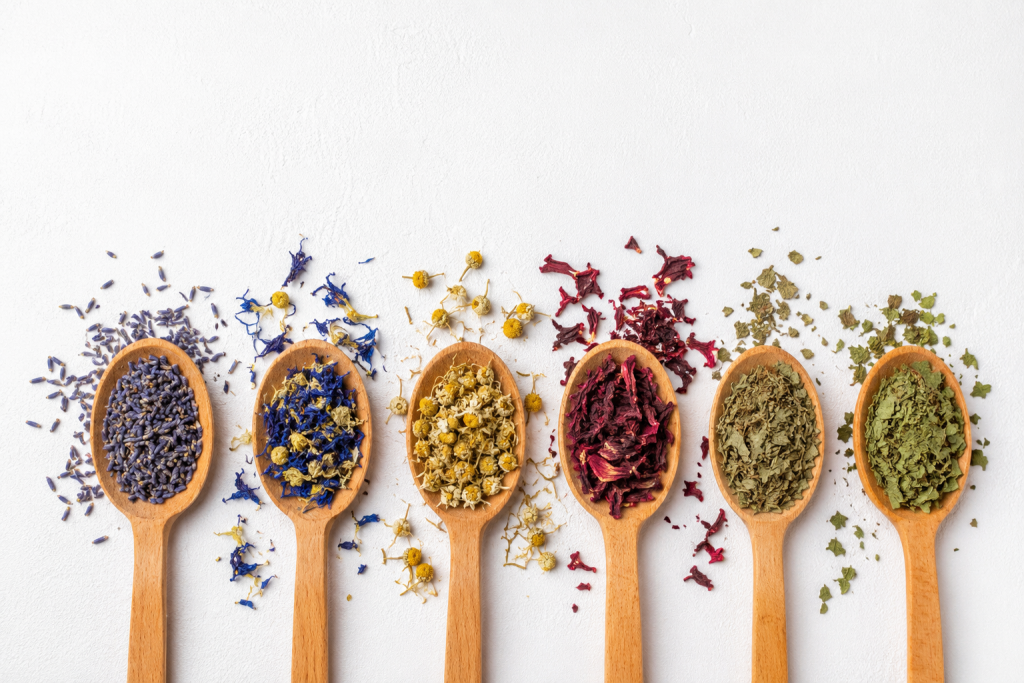
Whether you’re looking for the best floral teas to wind down at night, support your immunity, or just make your cup look beautiful — this guide covers the six best herbal and floral teas worth knowing: Blue Pea, Hibiscus, Chamomile, Lavender, Tulsi, and Moringa.
All 100% natural. All caffeine-free. All rooted in centuries of Ayurvedic wisdom.
Let’s get into it.
What Are Floral and Herbal Teas — And Are They the Same Thing?
Quick clarification before we dive in.
Floral teas are made from dried flowers or flower petals — think hibiscus, lavender, blue pea, and chamomile. Herbal teas (also called tisanes) are a broader category — they include roots, leaves, seeds, and flowers steeped in hot water, with no actual tea leaves (Camellia sinensis) involved.
So yes — all floral teas are herbal teas, but not all herbal teas are floral.
The six teas in this guide sit right at that crossover: botanical, beautiful, and genuinely beneficial.
The 6 Best Floral & Herbal Teas — A Complete Guide
1. Blue Pea Tea — The One That Changes Color
Best for: Antioxidants, brain health, stress relief
Blue Pea tea — brewed from the dried flowers of Clitoria ternatea — is probably the most visually dramatic thing you can make in a kitchen. Steep it and you get a deep indigo blue. Add a squeeze of lemon, and it shifts to violet or pink right in front of your eyes.
But it’s not just a party trick.
Why it works:
- Loaded with anthocyanins — powerful antioxidants linked to better memory and cognitive function
- Traditionally used in Ayurveda as a medhya herb — meaning it supports the mind
- Naturally caffeine-free, making it a great evening ritual
- May support healthy blood sugar levels and reduce oxidative stress
How to drink it: Hot with a pinch of honey, or cold over ice with lemon for a colour-changing mocktail effect. Stunning and functional.
Pro tip: Add a thin slice of butterfly pea-infused ice to your water bottle. People will ask questions.
2. Hibiscus Tea — Tart, Ruby Red, and Seriously Good for You
Best for: Blood pressure support, digestion, skin health
Hibiscus tea — made from the dried calyces of Hibiscus sabdariffa — has a cranberry-like tartness and a colour so deep red it looks like someone dropped a gemstone in your cup.
It’s one of the most research-backed herbal teas in the world, and it has been used in Indian, Egyptian, and Mexican traditional medicine for centuries.
Why it works:
- Studies suggest it may help lower blood pressure and reduce LDL (bad) cholesterol
- Rich in Vitamin C and anthocyanins — great for skin clarity and immunity
- Supports digestion and liver health
- A natural diuretic — helps reduce bloating
How to drink it: Hot with a little jaggery or honey to balance the tartness. Or steeped cold overnight for a beautiful iced hibiscus agua fresca.
Hibiscus is also one of the best teas to blend — try it with rose petals or a cinnamon stick.
3. Chamomile Tea — The Classic Calm-Down Cup
Best for: Sleep, anxiety, gut health
If there’s one herbal tea that’s universally understood — it’s chamomile. Brewed from the dried flowers of Matricaria chamomilla, it smells like a warm hug and tastes like the idea of going to bed early.
But chamomile earns its reputation every time.
Why it works:
- Contains apigenin, a flavonoid that binds to brain receptors to promote calm and support sleep
- Soothes the gut lining — helpful for IBS, bloating, and cramping
- Anti-inflammatory and mildly antispasmodic
- Particularly helpful for period cramps (worth noting for anyone who needs it)
How to drink it: Steep for at least 5 minutes to get full potency. Add honey and a little oat milk for a bedtime latte version that feels genuinely luxurious.
Chamomile + lavender = the most relaxing cup you’ll have all week.
4. Lavender Tea — For When Your Mind Won’t Quiet Down
Best for: Stress, anxiety, headaches, sleep quality
Lavender tea is made from the dried buds of Lavandula angustifolia — the same plant that goes into essential oils, sachets, and every “calm down” product you’ve ever seen.
The difference is that drinking it brings those benefits inside your body, not just around it.
Why it works:
- Linalool (lavender’s key compound) has proven anxiolytic (anti-anxiety) properties
- Reduces cortisol response and promotes nervous system calm
- Helpful for tension headaches and migraines
- Supports restful sleep — not just drowsiness, but sleep quality
How to drink it: Steep lightly — lavender is potent and can taste soapy if overdone. 1–2 minutes in hot water is enough. Pairs beautifully with chamomile or a small amount of honey.
Lavender tea is the one to reach for when you’ve had a day that felt like three.
5. Tulsi Tea — India’s Most Sacred Herbal Tea
Best for: Immunity, stress adaptation, respiratory health
Tulsi — or Holy Basil (Ocimum tenuiflorum) — is not just a plant in most Indian homes. It’s a ritual. And for very good reason.
Tulsi is classified as an adaptogen — a botanical that helps the body handle physical and mental stress. It’s been central to Ayurvedic medicine for over 3,000 years, and modern research is finally catching up to what traditional practitioners already knew.
Why it works:
- Powerful adaptogen — reduces the physiological effects of chronic stress
- Supports immunity through its antimicrobial and anti-inflammatory properties
- Helps with respiratory issues — congestion, seasonal allergies, mild infections
- Balances all three doshas in Ayurveda (Vata, Pitta, Kapha)
How to drink it: Tulsi has a slightly peppery, clove-like flavour. Drink it plain, or with ginger and honey for an immunity-boosting daily ritual. Best consumed in the morning.
There’s a reason tulsi grows in almost every Indian courtyard. It is a living pharmacy.
6. Moringa Tea — The Nutrient Density Champion
Best for: Energy (without caffeine), nutrition, inflammation, metabolism
Moringa tea — made from the dried leaves of Moringa oleifera, also called the “drumstick tree” — is the most nutrient-dense entry on this list. It is not technically a floral tea, but it belongs in any serious conversation about the best herbal teas because nothing quite competes with its nutritional profile.
Moringa leaves contain more iron than spinach, more calcium than milk, and more Vitamin C than oranges — all in a cup.
Why it works:
- Contains 90+ nutrients including vitamins A, C, E, calcium, iron, and essential amino acids
- Naturally energising without caffeine — thanks to its iron and B-vitamin content
- Strong anti-inflammatory properties via isothiocyanates
- Supports blood sugar regulation and metabolism
- Excellent for anaemia and fatigue — especially relevant for women
How to drink it: Moringa has a mild, earthy, slightly grassy taste. Steep in warm (not boiling) water to preserve nutrients. A squeeze of lemon and honey makes it very drinkable. Also good as a cold brew.
If you’re looking to replace your afternoon coffee without losing your energy, this is the tea.
Quick Comparison: Which Tea Is Right for You?
| Tea | Best For | Taste Profile | Best Time to Drink |
|---|---|---|---|
| Blue Pea | Antioxidants, brain health | Earthy, mild | Morning or evening |
| Hibiscus | Blood pressure, skin, digestion | Tart, fruity | Afternoon |
| Chamomile | Sleep, calm, gut health | Floral, sweet | Night |
| Lavender | Anxiety, headaches, sleep | Floral, herbal | Evening |
| Tulsi | Immunity, stress, respiratory | Peppery, spiced | Morning |
| Moringa | Energy, nutrition, inflammation | Earthy, mild | Morning or afternoon |
Can You Mix These Teas Together?
Yes — and you should.
Some blends that work beautifully:
- Chamomile + Lavender → the ultimate sleep blend
- Tulsi + Moringa → morning immunity and energy ritual
- Hibiscus + Blue Pea → a stunning antioxidant-rich brew (and it changes colour)
- Lavender + Chamomile + Blue Pea → caffeine-free calm with a beautiful blue hue
Mixing floral and herbal teas amplifies benefits and creates flavour complexity. It’s the most underrated thing you can do with your tea shelf.
Are Floral and Herbal Teas Safe to Drink Every Day?
For most healthy adults — yes. These teas are caffeine-free, naturally sourced, and consumed daily across Ayurvedic traditions without issue.
That said:
- Chamomile may interact with blood thinners — consult your doctor if you’re on medication
- Hibiscus can lower blood pressure — those already on BP medication should be mindful of quantity
- Tulsi has adaptogenic properties that may interact with blood sugar medications
- Lavender in very large quantities may cause drowsiness
As a general rule: 1–3 cups of herbal tea per day is a well-established, safe range for most people.
Where to Buy the Best Floral and Herbal Teas in India
When buying herbal or floral teas, look for:
- 100% natural, single-ingredient teas — no artificial flavours or fillers
- Whole flowers or whole leaves — not just powder or dust
- Ayurveda-informed sourcing — brands that understand the traditional context of these botanicals
At Blossom Brews, all six teas in this guide — Blue Pea, Hibiscus, Chamomile, Lavender, Tulsi, and Moringa — are available as pure, premium botanical infusions. No caffeine. No compromise. Just blossoms you can brew.
👉 Explore the full range at BlossomBrews.com
Final Word
The best floral teas and herbal teas aren’t complicated. They’re flowers, leaves, and roots that have been trusted for thousands of years — and they still hold up.
Whether you’re here for sleep, immunity, energy, or simply because hot water and flowers sound like the most peaceful thing you can do for yourself right now — there is a cup on this list that is made for you.
Start with one. Build the ritual. Your body will notice.
Have a question about which tea to start with? Drop it in the comments — or explore our full guide to Ayurvedic botanicals on the Blossom Brews blog.