
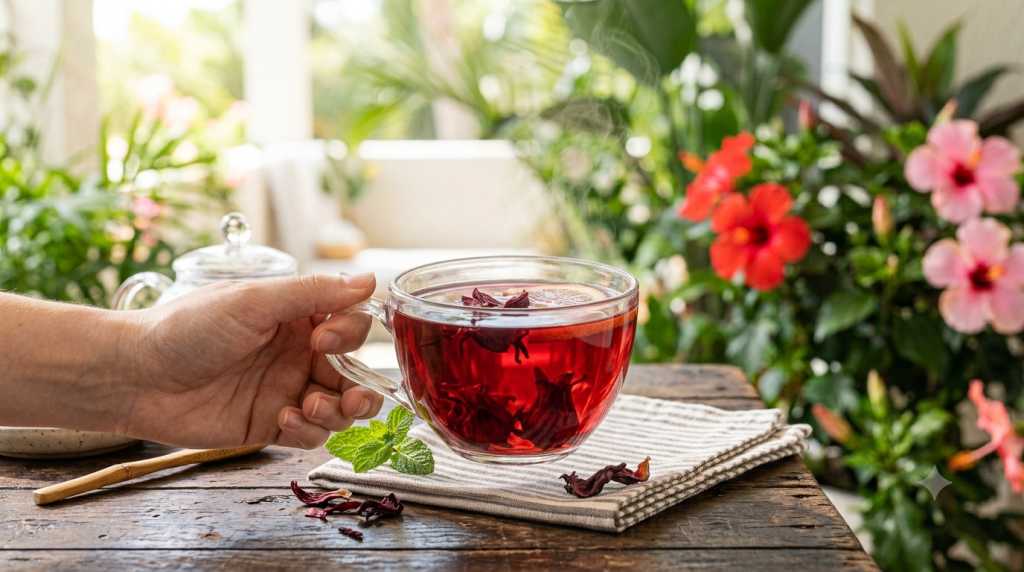
Hibiscus Tea Benefits: The Tart, Vibrant Floral Tea for Heart & Skin
Somewhere between a fruity iced tea and a wellness tonic sits hibiscus tea — a deep crimson brew with a tang so bold it’s often compared to cranberry juice. It’s one of the oldest floral teas in the world, sipped for centuries across Africa, the Middle East, and India, and today it’s having a well-deserved moment in modern wellness circles.
At Blossom Brews, hibiscus holds a special place in our floral tea collection. It’s the one people reach for when they want more than just a warm drink — they want a ritual that supports their heart, their skin, and their day.
What Is Hibiscus Tea, Exactly?
Hibiscus tea is made by steeping the dried calyces (the petal-like structures surrounding the flower’s base) of the Hibiscus sabdariffa plant in hot water. As the flower steeps, it releases a rich ruby-red color and a flavor that’s tart, slightly fruity, and refreshingly sharp — closer to cranberry or pomegranate than to a typical cup of tea.
Like blue pea flower or chamomile, hibiscus contains zero caffeine, making it a naturally soothing addition to any floral tea rotation, whether you’re sipping it at 8 am or 8 pm.
Why Hibiscus Deserves a Place in Your Routine
1. Supports heart health Hibiscus is one of the most studied floral teas when it comes to cardiovascular wellness. It’s naturally rich in anthocyanins — the same class of antioxidant pigments that give the flower its deep red color — which are associated with healthy blood vessel function and circulation.
2. Packed with Vitamin C and antioxidants A cup of hibiscus tea delivers a solid dose of Vitamin C along with polyphenols and flavonoids, compounds that help the body manage everyday oxidative stress and support a healthy immune system.
3. May support glowing skin Thanks to its Vitamin C content, hibiscus is often associated with collagen support and a brighter, more radiant complexion — one reason it’s a favorite ingredient in skin-focused wellness routines.
4. Gentle on digestion Hibiscus has mild diuretic properties and has traditionally been used to ease bloating and support regular digestion, making it a pleasant after-meal floral tea.
5. A refreshing, low-calorie alternative to sugary drinks With its naturally tart, almost juice-like flavor, hibiscus tea is an easy swap for sweetened beverages — hot in winter, or poured over ice as a bright, thirst-quenching cooler in summer.
How to Brew Hibiscus Tea the Right Way
Hibiscus is forgiving to brew, but a few small details make a big difference in flavor and color:
- Use hot water, just off the boil — around 95–100°C works well for hibiscus, unlike more delicate florals such as chamomile or lavender.
- Steep 1–2 teaspoons of dried calyces for 5–7 minutes. The longer it steeps, the deeper the red and the tangier the flavor.
- Strain and taste. If it’s too tart for your liking, a small spoon of honey balances it out beautifully without masking the flavor.
- Serve it iced for a summer twist — brew double-strength, chill, and pour over ice with a few mint leaves.
Hibiscus Tea vs. Other Floral Teas
Where blue pea tea is about visual drama and chamomile is about winding down, hibiscus stands out for its bold, tart character and its long-standing reputation as a heart-friendly floral tea. It pairs beautifully in a rotation with lighter blooms — sip hibiscus in the morning for a bright start, and save something like chamomile or lavender for the evening.
That balance of flavor and function is exactly why hibiscus is a core part of the Blossom Brews lineup. Our Hibiscus Tea is made purely from dried hibiscus petals — no fillers, no added flavoring, no shortcuts — so every cup delivers the tart, ruby-red experience the flower is known for.
A Few Common Questions About Hibiscus Tea
Is hibiscus tea safe to drink every day? For most people, a cup or two daily fits comfortably into a healthy routine. As with any herbal tea, keep intake moderate and check with a doctor if you’re pregnant or on blood pressure medication.
Does hibiscus tea taste like regular tea? Not quite. With no tea leaves involved, you get a bright, tangy flavor closer to a fruit infusion than the mellow notes of black or green tea — nature’s answer to cranberry juice.
Can I mix hibiscus with other floral teas? Yes. Hibiscus blends well with tart or citrus notes, and pairs nicely in a rotation alongside other florals like tulsi or moringa.
Final Sip
Hibiscus tea isn’t just a pretty color in your cup — it’s a floral tea with real substance, backed by centuries of traditional use and a growing body of modern research around heart health, skin, and digestion. Whether you drink it hot on a quiet morning or iced on a warm afternoon, it’s an easy, flavorful way to bring a little more wellness into your day.
Ready to try it? Explore Blossom Brews’ Hibiscus Tea and discover why this tart, vibrant floral tea has stood the test of time.