
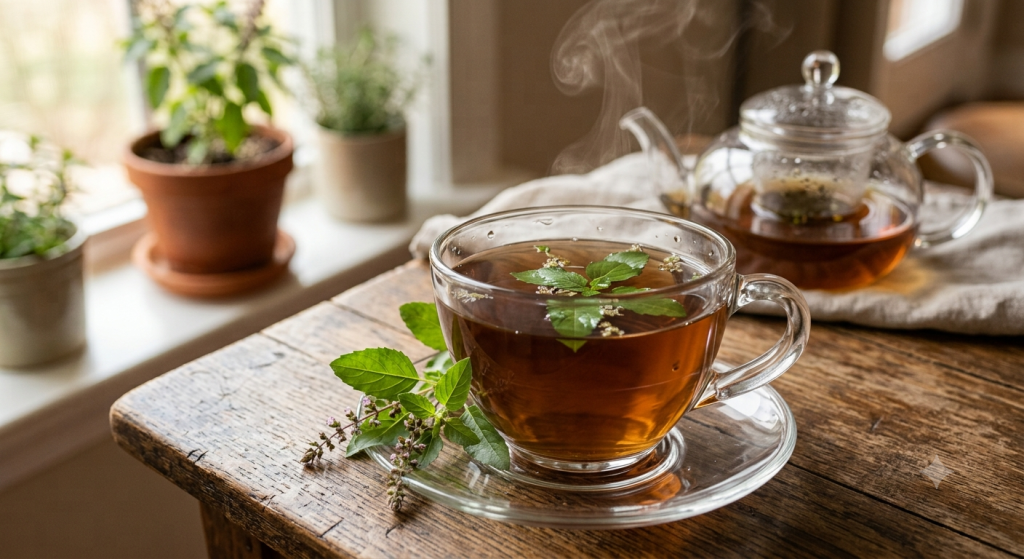
Tulsi Tea Benefits: The Adaptogenic Floral Tea for Immunity & Stress
Long before “adaptogen” became a wellness buzzword, Indian households already had one growing in their courtyards. Tulsi tea, made from the leaves of the holy basil plant, has been part of daily Ayurvedic life for over 3,000 years — steeped fresh each morning, offered in prayer, and sipped as a natural way to steady the body against everyday stress.
At Blossom Brews, tulsi holds a special place as our immunity-focused floral tea — the one rooted most deeply in tradition, and increasingly backed by modern research to match.
What Is Tulsi Tea?
Tulsi tea is brewed from the leaves of Ocimum sanctum (also called Ocimum tenuiflorum), commonly known as holy basil. Unlike culinary basil, tulsi has a warm, slightly peppery, clove-like flavor with a gentle sweetness — a taste that feels more like a tonic than a typical cup of tea.
It’s completely caffeine-free and classified in Ayurveda as a “rasayana,” a rejuvenating herb traditionally used to support long-term vitality rather than offer a quick fix.
The Science Behind Tulsi’s Adaptogenic Effect
Tulsi belongs to a category of herbs called adaptogens — plants believed to help the body regulate its stress response rather than sedate it outright. This is an important distinction: tulsi doesn’t make you drowsy the way chamomile or lavender might. Instead, research suggests it helps the body respond more efficiently to stress over time.
The main compounds behind this effect are eugenol, ursolic acid, and rosmarinic acid. Eugenol, the compound responsible for tulsi’s signature aroma, has been studied for its mild interaction with GABA receptors — the same calming pathway targeted by lavender and chamomile, though through a gentler mechanism. Clinical research has also linked regular tulsi intake to modulated cortisol levels, improved markers of perceived stress, and support for healthy immune response.
It’s worth noting that adaptogens generally work cumulatively. Unlike a cup of chamomile before bed, tulsi’s stress-resilience benefits tend to build over four to twelve weeks of consistent use, more like training the body’s stress response than triggering an instant calming effect.
Why People Reach for Tulsi Tea
1. Builds resilience to everyday stress Rather than sedating the nervous system, tulsi is believed to help the body adapt to and recover from stress more efficiently over time.
2. Supports immune function Tulsi is rich in antioxidants that help neutralize free radicals and support the body’s natural defenses, which is part of why it’s traditionally sipped through changing seasons.
3. Encourages mental clarity Many longtime tulsi drinkers describe a subtle, grounded alertness rather than a sedative effect — useful for a midday floral tea break.
4. Supports respiratory comfort In Ayurvedic tradition, tulsi has long been paired with warm water or tea during seasonal changes, valued for its soothing effect on the throat and chest.
5. A caffeine-free daily ritual Because it doesn’t cause drowsiness, tulsi tea fits naturally into a morning or midday routine, unlike more sedating floral teas better suited to the evening.
How to Brew the Perfect Cup
Tulsi is a forgiving herb to brew, but a few details bring out its best:
- Use hot water, just off the boil — around 95–100°C.
- Steep 1–2 teaspoons of dried tulsi leaves for 5–7 minutes to draw out its full aromatic profile.
- Add a slice of ginger or a squeeze of lemon if you’d like a warming, slightly citrusy twist.
- Drink it consistently. Since tulsi’s adaptogenic benefits build over weeks, a daily cup matters more than a single strong brew.
Tulsi Tea vs. Other Floral Teas
Where chamomile and lavender lean toward sedation and calm, tulsi takes a different approach — supporting the body’s resilience without inducing drowsiness. That makes it a natural morning or midday counterpart to the more relaxing florals in a well-rounded routine, and a fitting daily companion to immunity-focused wellness habits.
That balance of tradition and function is exactly why tulsi anchors the Blossom Brews collection. Our Tulsi Tea is made from pure, dried holy basil leaves — no fillers, no shortcuts — carrying forward a ritual that Indian households have trusted for generations.
Final Sip
Tulsi tea isn’t just an Ayurvedic tradition — it’s a genuinely adaptogenic floral tea with a growing body of modern research behind its role in stress resilience and immune support. Sipped consistently, it’s less about one calming cup and more about building a steadier baseline over time.
Ready to make it part of your routine? Explore Blossom Brews’ Tulsi Tea and bring a 3,000-year-old ritual into your everyday cup.